

Best overall: a Catrina-style skeleton figurine. Best for a personal ofrenda: an occupation-themed skeleton. Best for a small shelf: a miniature skeleton. This 2026 guide ranks Día de los Muertos figurine styles by the display you want to create, rather than treating every decorative skeleton as interchangeable.
- For skeleton figurines dia de los muertos searches, choose Catrina figures for a focal point and occupation figures for personal remembrance.
- Musician skeletons suit lively group displays; paired skeletons suit a shared remembrance.
- For Folk Heart Cafe readers, the best Día de los Muertos figurine connects the display to someone remembered.
- Check dimensions, base stability, material, and maker information before choosing a figurine.
Why this matters
Día de los Muertos centers on remembering people who have died. Skeleton imagery belongs within that context; choosing a figure only because it looks spooky misses the purpose of an ofrenda, the altar or arrangement prepared for remembrance.
If you are browsing Folk Heart Cafe, begin with the person or setting your display represents. A musician can recall a love of music, while an occupation-themed figure can reference someone's working life. Neither needs to be the largest object in the arrangement to matter.
For your 2026 display, decide whether the figurine will anchor an altar, join a tabletop grouping, or occupy a bookshelf. Those are different jobs. The best choice for one is not automatically the best choice for another.
What makes the best Día de los Muertos skeleton figurines?
Use these criteria before comparing styles:
- Personal relevance: Choose a subject that connects with the person remembered or the display's purpose.
- Readable silhouette: Look for a pose, hat, instrument, or other detail you can recognize from the intended viewing distance.
- Display fit: Compare height, width, and depth with the actual space, including nearby photographs and offerings.
- Base stability: Favor a figure that stands securely on your display surface without leaning against another object.
- Clear material information: Check the stated material and care instructions rather than judging durability from a photograph.
- Maker information: Use explicit artist, workshop, and origin details when evaluating provenance. Appearance alone proves none of them.
Choose the subject first, the footprint second, and the decorative details third. An elaborate figurine is the wrong choice if it blocks the photograph your altar is meant to honor.
Best skeleton figurine styles at a glance
These rankings compare display styles, not specific products or makers. Each recommendation serves a distinct purpose.
| Rank and style | Best for | Standout feature | Key limitation |
|---|---|---|---|
| 1. Catrina-style skeleton | A central decorative focal point | Formal dress and a recognizable silhouette | A tall hat or wide skirt needs clearance |
| 2. Musician skeleton | A lively tabletop grouping | An instrument gives the pose a clear subject | Projecting details complicate handling |
| 3. Paired skeletons | Remembering a relationship | Connected figures tell a shared story | A pairing needs more visual space |
| 4. Occupation-themed skeleton | A personally meaningful ofrenda | Work-related details connect to a life remembered | The subject must fit the individual |
| 5. Miniature skeleton | A narrow shelf or supporting accent | A small footprint fits restricted spaces | Fine details disappear at a distance |
1. Catrina-style skeleton: best for a central focal point
A Catrina-style figurine depicts an elegantly dressed female skeleton, often with a prominent hat. Its clothing and silhouette give you a clear visual anchor without requiring a group of figures to explain the scene.
Choose this style when your 2026 arrangement needs one leading decorative object. Set the figure beside, rather than directly in front of, a photograph so the decoration does not obscure the person being remembered.
Catrina-style skeleton pros:
- A distinctive silhouette reads clearly within a larger arrangement.
- Formal clothing gives you details to coordinate with surrounding decorations.
- A single figure can establish a focal point without a crowded scene.
Catrina-style skeleton cons:
- A broad hat or skirt can occupy more space than the base suggests.
- A generic elegant figure offers less personal specificity than a subject tied to someone's life.
Check the full outline, not just the base width. A hat that extends over a shelf edge or into another object still counts toward the space the figurine needs. Judge the pose from the angle you will actually see most often.
Best for: A mantel, console, or altar that needs a central decorative figure.
Verdict: Buy a Catrina-style skeleton when you want one clear focal point.
2. Musician skeleton: best for a lively tabletop grouping
A musician skeleton uses an instrument and performance pose to establish its subject. The appeal is narrative: the figure appears to be doing something, which helps a tabletop arrangement feel like a scene rather than a row of unrelated ornaments.
Choose the instrument intentionally. A musical reference becomes more meaningful when it connects to a person, family memory, or song associated with your remembrance.
Musician skeleton pros:
- The instrument makes the subject understandable without a label.
- Different poses can create variety within a grouping.
- A musical subject provides a direct connection to remembered interests.
Musician skeleton cons:
- Instruments and extended arms create projecting details to handle carefully.
- Several expressive figures can compete with photographs and other central objects.
Before grouping musicians, compare their scale and viewing direction. A figure facing away from the main scene can look disconnected even when its colors match. Leave visible gaps between silhouettes so instruments do not merge into an unreadable cluster.
Do not assume a figurine represents a particular musical tradition merely because it holds a guitar or wears a hat. Use the maker's description for that identification.
Best for: A tabletop scene centered on music and remembered celebrations.
Verdict: Buy a musician skeleton when music is part of the story you want to tell.
3. Paired skeletons: best for remembering a relationship
Paired skeletons place the relationship between figures at the center of the composition. They can make sense when your arrangement remembers a couple or another shared connection, provided the pose suits that relationship.
Read the interaction before choosing the piece. Dancing, sitting together, and formal wedding poses communicate different things; a wedding-themed pair is not a neutral substitute for every relationship.
Paired skeletons pros:
- Connected poses communicate a shared story immediately.
- A paired composition reduces the need to arrange separate figures.
- The relationship can become the display's organizing idea.
Paired skeletons cons:
- Two figures can require a broader footprint than a single upright figure.
- A fixed pose gives you less freedom to change the arrangement.
Place a pair where both faces and the connection between them remain visible. A photograph, flower arrangement, or candle holder positioned across that connection can hide the very feature that makes the piece meaningful.
If the figurines are separate rather than joined, check each base individually. Do not rely on one figure leaning against the other for support, and handle joined figures by their supporting base rather than by the connection between them.
Best for: An arrangement that honors a shared relationship.
Verdict: Buy paired skeletons when the relationship, not an individual activity, is the main subject.
4. Occupation-themed skeleton: best for a personal ofrenda
An occupation-themed skeleton depicts a recognizable role through clothing, tools, or activity. Choose this style when that role connects directly to the person you are remembering, rather than selecting a profession simply because the figure is amusing.
For a personal ofrenda in 2026, this is the strongest alternative to a general decorative centerpiece. It gives visitors a specific entry point into the person's life.
Occupation-themed skeleton pros:
- Work-related details can make a remembrance more specific.
- The subject provides a natural starting point for sharing memories.
- A relevant figure can connect visually with photographs or personal objects.
Occupation-themed skeleton cons:
- A person's occupation does not necessarily represent what mattered most to them.
- Small tools and accessories can be difficult to read from across a room.
Ask whether the figure reflects how the person would want to be remembered. A lifelong hobby or musical interest can be more appropriate than a job. Personal relevance outranks a literal match to a résumé.
Give the figurine enough open space for its defining detail to remain visible. If you cannot identify the activity from your normal viewing position, move the figure closer or choose a clearer silhouette.
Best for: An ofrenda built around an individual's life and interests.
Verdict: Buy an occupation-themed skeleton only when the subject has a genuine personal connection.
5. Miniature skeleton: best for a narrow shelf
A miniature skeleton works as a supporting accent where a larger figure would dominate. It suits a small shelf, a compact arrangement, or a display where photographs should remain visually primary.
Small does not automatically mean easier to position. A tiny figure can disappear behind surrounding objects, and a narrow base still needs a stable, level surface.
Miniature skeleton pros:
- A compact footprint suits restricted display areas.
- A small figure can support a larger composition without becoming its center.
- Close viewing makes small decorative details part of the experience.
Miniature skeleton cons:
- Fine details become hard to distinguish at a distance.
- A small piece is easier to overlook when moving nearby objects.
Choose miniatures for places you approach, not for a high shelf viewed from across the room. Keep the immediate background simple so the outline remains visible. A small figure in front of a busy pattern can lose definition regardless of its color.
If you want a central focal point, do not substitute several miniatures without reconsidering the whole composition. More objects are not the same as a clearer display.
Best for: A narrow bookshelf or a supporting position beside a photograph.
Verdict: Buy a miniature skeleton for close viewing; skip it as a distant centerpiece.
How we ranked these figurine styles
The order prioritizes a clear default, then separates the alternatives by display purpose. Catrina-style figures lead for a central silhouette; musicians, pairs, and occupation-themed figures serve increasingly specific stories. Miniatures solve a space constraint rather than a storytelling need.
These are fit-based recommendations, not claims about material quality or craftsmanship. Judge those qualities from the individual piece's description, photographs, construction, and maker information.
Check the fit before choosing
For your 2026 arrangement, measure all 3 dimensions: height, width, and depth. Include anything that projects beyond the base, such as a hat, instrument, skirt, or extended arm.
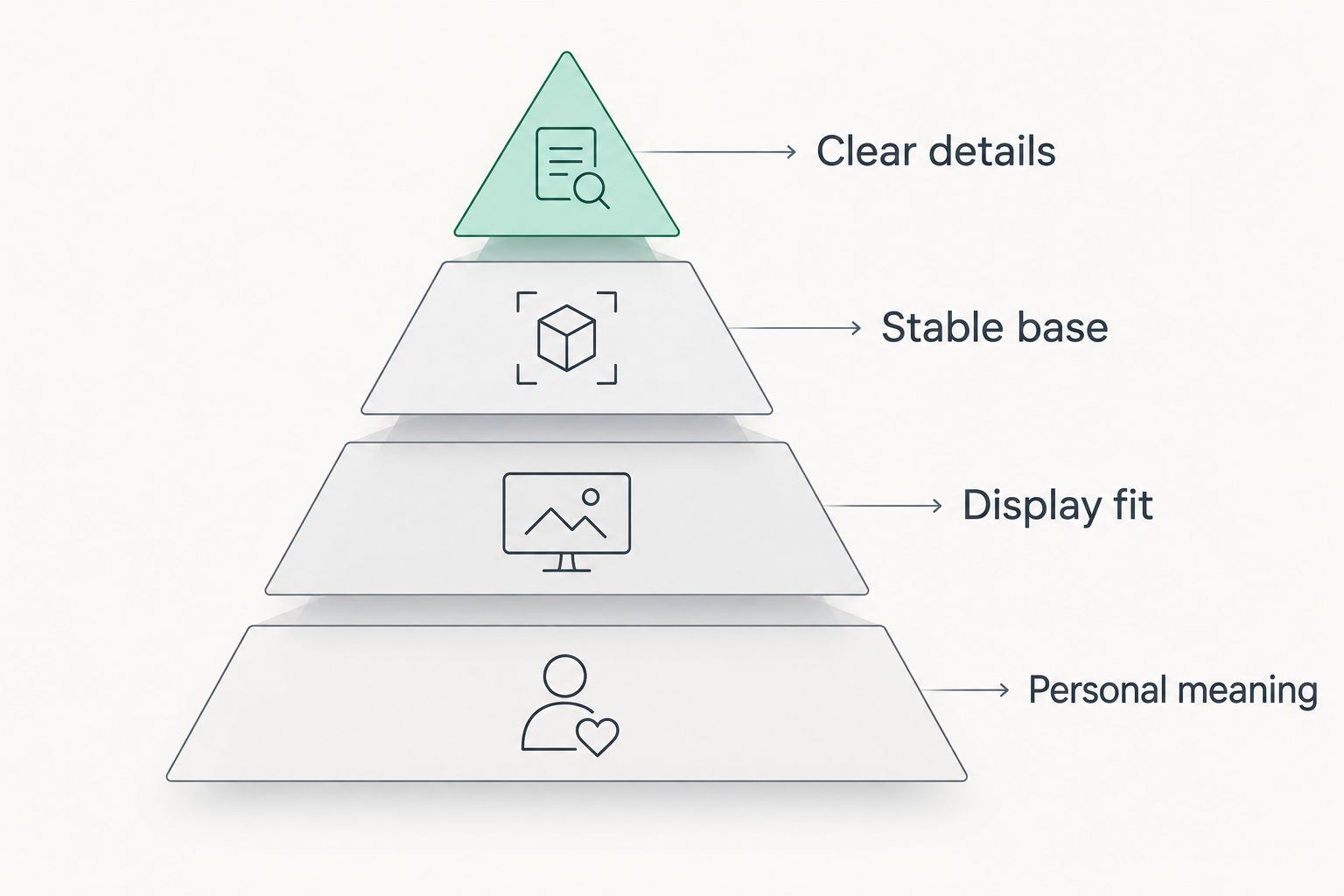
Make 1 paper template matching the stated footprint and place it where the figure will stand. Then check these priorities in order:
- Personal meaning: Does the subject belong in this remembrance?
- Display fit: Does the full silhouette leave photographs and offerings visible?
- Stable base: Will the figure stand securely on the intended surface?
- Clear details: Can you recognize the subject from your usual viewing position?
Keep figurines away from open flames and follow the care instructions for their stated material. Do not assume a decorative figure is washable, weatherproof, or suitable for outdoor use based on its appearance.
Which skeleton figurine should you choose?
Choose a Catrina-style skeleton if you want a decorative centerpiece and have no more specific subject in mind. Choose an occupation-themed figure when personal remembrance is the priority, or a musician when music carries the connection.
For readers browsing Folk Heart Cafe for Día de los Muertos figurines, the best choice is a figure that supports the remembrance without obscuring it. A meaningful subject in the right place beats a larger, more elaborate piece that distracts from the display.
FAQ
What's the best skeleton figurine for Día de los Muertos decor?
A Catrina-style skeleton is the best default for a central decorative focal point. For a personal ofrenda, choose a subject connected to the person remembered, such as music or a meaningful occupation.
Are Día de los Muertos skeletons the same as Halloween skeletons?
No. Día de los Muertos skeleton imagery belongs to a tradition of remembrance, while Halloween skeleton decorations commonly emphasize spooky themes. Choose the figure and surrounding arrangement with that distinction in mind.
What is a Catrina-style skeleton figurine?
A Catrina-style figurine depicts an elegantly dressed female skeleton, often wearing a prominent hat. The silhouette makes it a useful decorative focal point, but appearance alone does not establish where a piece was made.
Can I put a skeleton figurine on an ofrenda?
Yes, a skeleton figurine can form part of an ofrenda. Choose a relevant subject and position it so photographs, offerings, and personal objects remain visible.
What size skeleton figurine should I choose for a shelf?
Choose a figure whose full height, width, and depth fit the shelf without overhang or contact with neighboring objects. Miniatures suit close viewing; larger, clearer silhouettes work better when viewed from farther away.
How do I know whether a figurine is handmade in Mexico?
Use explicit maker, workshop, and origin information from the seller or artist. Color, subject, and decorative style do not prove that a figurine is handmade or made in Mexico.
Can I display skeleton figurines outside?
Use a skeleton figurine outdoors only when its stated care instructions permit outdoor display. Decorative appearance does not establish resistance to moisture, sunlight, or changing temperatures.
One last thing
Before finishing your 2026 display, look at it from the position where you will spend time remembering. The best close-up detail means little if a hat hides a face or an instrument disappears behind flowers. Move the figure before adding more decoration.

