

Best overall: carved wooden animals. Best for colorful shelves: painted clay figures. Best for a soft contrast: textile figures. This Folk Heart Cafe guide compares folk art figurines for bookshelf display by shape, material, stability, and care—not by unsupported claims about individual makers.
- Carved wooden animals are the best overall folk art figurines for bookshelf display when you want a clear silhouette.
- Painted clay figures suit colorful bookshelf styling; fragile details need protection from moving books.
- Papier-mâché figures offer lightweight sculptural accents, but moisture and surface damage require attention.
- Choose a stable base and documented materials before choosing decorative detail.
Why this matters
A figurine has to work beside books, not just look appealing in an isolated photograph. A projecting arm can catch a sleeve; a narrow base can become a problem when you slide out a nearby hardback. Shelf fit includes the space around the object, not merely its height.
For your 2026 shortlist, start with the shelf you actually use. This Folk Heart Cafe guide treats each material as a different display choice, with strengths and drawbacks you can check before buying. The recommendations rank types of figurines rather than claim that unverified products have particular features.
What makes the best folk art figurines for bookshelf display?
- Readable silhouette: The outline should remain recognizable beside book spines. Tiny details are a bonus, not the whole reason to choose it.
- Stable footprint: Look for a base that rests securely on a level shelf. Photograph angles alone do not establish stability.
- Suitable proportions: Check height, width, depth, and projecting details against the usable shelf opening.
- Documented construction: Seek the material, maker, and production method. A folk-inspired appearance does not establish handmade production or cultural origin.
- Manageable care: Choose a surface and construction you can clean according to the maker’s instructions.
- Visual restraint: Give the figurine a distinct role: focal point, color accent, or textural contrast. Avoid making every shelf compete for attention.
For Folk Heart Cafe readers, carved wooden animals are the best default bookshelf figurines when silhouette matters more than intricate detail. That is a styling recommendation, not a claim that every wooden figure has the same construction or quality.
Folk art figurines at a glance
| Figurine type | Best for | Standout feature | Key limitation |
|---|---|---|---|
| Carved wooden animals | An everyday bookshelf focal point | A recognizable sculptural outline | Projecting ears, tails, and legs need protection |
| Painted clay figures | A deliberate color accent | Painted surfaces and modeled shapes | Thin details can chip or break |
| Papier-mâché figures | Lightweight sculptural display | Built-up forms without solid construction | Moisture and pressure can damage the surface |
| Glazed ceramic figures | Contrast beside matte book covers | A light-reflecting glazed surface | Glaze does not prevent breakage |
| Textile figures | Soft texture beside hard surfaces | Fabric, stitching, and a softer outline | Unsupported figures can slump or lean |
The distinction between painted clay and glazed ceramic here is the visible finish and display role, not a claim that they are unrelated materials. Check each listing: painted, glazed, and mixed finishes require different care.
1. Carved wooden animals: best bookshelf figurines for everyday display
Carved wooden animals give a bookshelf a recognizable shape without requiring an elaborate scene. A bird, horse, or other animal with a clear outline works as a focal point beside a short run of books. Choose the actual carving for its base and proportions, not simply for the word wood in the description.
Carved wooden animal pros:
- A distinct silhouette remains visible against patterned spines.
- Carved surfaces introduce texture beside flat covers.
- A single animal figure can anchor a shelf without additional ornaments.
Carved wooden animal cons:
- Thin tails, legs, antlers, or ears are vulnerable to knocks.
- Paint, wax, and other finishes need their own care instructions.
Best for: A reader who wants one clear focal point rather than a collection of small decorative details.
Look at the figure from the angle you will normally see it. A carving photographed from above can appear very different at seated eye level. Also inspect whether the feet or base sit evenly; material alone does not guarantee a secure stance.
Verdict: Buy a carved wooden animal when its silhouette is clear and its base suits your shelf. Skip a delicate projecting design beside books you remove frequently.
2. Painted clay figures: best bookshelf figurines for color accents
Painted clay figures bring color directly into the object rather than relying on surrounding accessories. Human, animal, and imagined forms can all serve this role. Select a figure whose painted areas remain legible against your books instead of disappearing into a busy background.
Painted clay figure pros:
- Painted areas can connect with colors already present on the shelf.
- Modeled shapes create contrast with rectangular books.
- A compact figure can act as a focal point without a large arrangement.
Painted clay figure cons:
- Projecting clay details can chip or break when struck.
- Cleaning methods depend on the paint and surface treatment.
Best for: A shelf that needs a deliberate color accent rather than another neutral object.
For a 2026 refresh, choose the color relationship before the subject. Decide whether the figurine should repeat an existing color or stand apart from it. Then inspect close-up photographs for surface condition, especially if you are considering a previously owned piece.
Do not infer that a painted clay figure is washable, outdoor-safe, or suitable for a damp room. Those are product-specific claims that require explicit care information.
Verdict: Buy painted clay for a clear color accent. Skip it where moving books regularly brush against the figure.
3. Papier-mâché figures: best bookshelf figurines for lightweight forms
Papier-mâché uses paper-based construction to create sculptural forms. It suits a display where you want an expressive shape without choosing a solid clay or ceramic object. Actual weight still depends on the size, armature, base, and any added materials.
Papier-mâché figure pros:
- Paper-based construction supports built-up, expressive forms.
- Painted surfaces provide an alternative to visible wood grain or glaze.
- A pronounced outline can stand apart from straight book spines.
Papier-mâché figure cons:
- Moisture can damage paper-based construction.
- Pressure or rough handling can dent or damage the surface.
Best for: A dry, protected shelf where the figure will remain largely undisturbed.
Check the underside and base as carefully as the visible face. A light figure is not automatically a stable figure. Ask whether the construction includes a supporting frame or weighted base if the listing does not make that clear.
Avoid squeezing a papier-mâché figure into a gap between tightly packed books. Its role is display, not holding a row upright, unless the maker explicitly identifies the object as a bookend.
Verdict: Buy papier-mâché for a protected sculptural accent. Skip it beside drinks, damp plants, or frequently handled books.
4. Glazed ceramic figures: best bookshelf figurines for surface contrast
Glazed ceramic figures offer a different surface beside matte paper, cloth bindings, and unfinished wood. A glossy glaze reflects light; a matte glaze creates a quieter effect. Judge the specific finish in the listing rather than assuming all ceramics look shiny.
Glazed ceramic figure pros:
- Glossy finishes introduce reflected light beside matte books.
- Modeled forms create contrast with rectangular shelving.
- Glaze provides a distinct surface treatment from painted paper or fabric.
Glazed ceramic figure cons:
- Ceramic can break or chip after impact.
- A glazed surface does not establish that an object is washable or dishwasher-safe.
Best for: A shelf that needs surface contrast more than additional fabric texture or exposed grain.
In your 2026 selection, examine the underside, projecting details, and any condition notes. For older or previously owned objects, request clear photographs of chips, cracks, or repairs rather than treating character as a substitute for a condition description.
Place the figurine where taking out a book does not require lifting it first. An attractive arrangement becomes inconvenient when normal reading repeatedly puts a fragile object in your hand.
Verdict: Buy glazed ceramic for a protected display with room around it. Skip it on a crowded shelf that gets constant handling.
5. Textile figures: best bookshelf figurines for soft texture
Textile figures use fabric and stitching to introduce a softer outline beside books and hard shelving. Their construction ranges from unsupported cloth forms to figures with internal supports. Whether a particular piece can stand independently must come from its description or photographs.
Textile figure pros:
- Fabric adds texture beside paper, wood, and ceramic.
- Stitching and layered cloth provide detail without a reflective surface.
- A soft outline contrasts with the geometry of book spines.
Textile figure cons:
- Unsupported construction can slump or lean.
- Fabric collects dust, and cleaning depends on dyes, filling, and attached details.
Best for: A shelf that feels visually hard and needs a softer decorative element.
Check whether the figure stands, sits, hangs, or needs a separate support. Those are different display arrangements. Do not assume a decorative cloth figure is a toy or that its materials are suitable for children.
Verdict: Buy a textile figure when its supported position suits your shelf. Skip an unsupported standing figure if you want a tidy, upright silhouette without adjustment.
How the ranking works
This 2026 ranking prioritizes silhouette, stable placement, shelf proportions, documented construction, and practical care. Carved wooden animals take the default position because a clear animal outline provides a straightforward focal point; the remaining choices address color, lightweight form, surface contrast, and soft texture.
This is a material-and-display guide, not a hands-on product test. No material automatically establishes craftsmanship, authenticity, durability, or cultural significance. Those judgments require information about the specific object and maker.
Check the shelf before choosing the figure
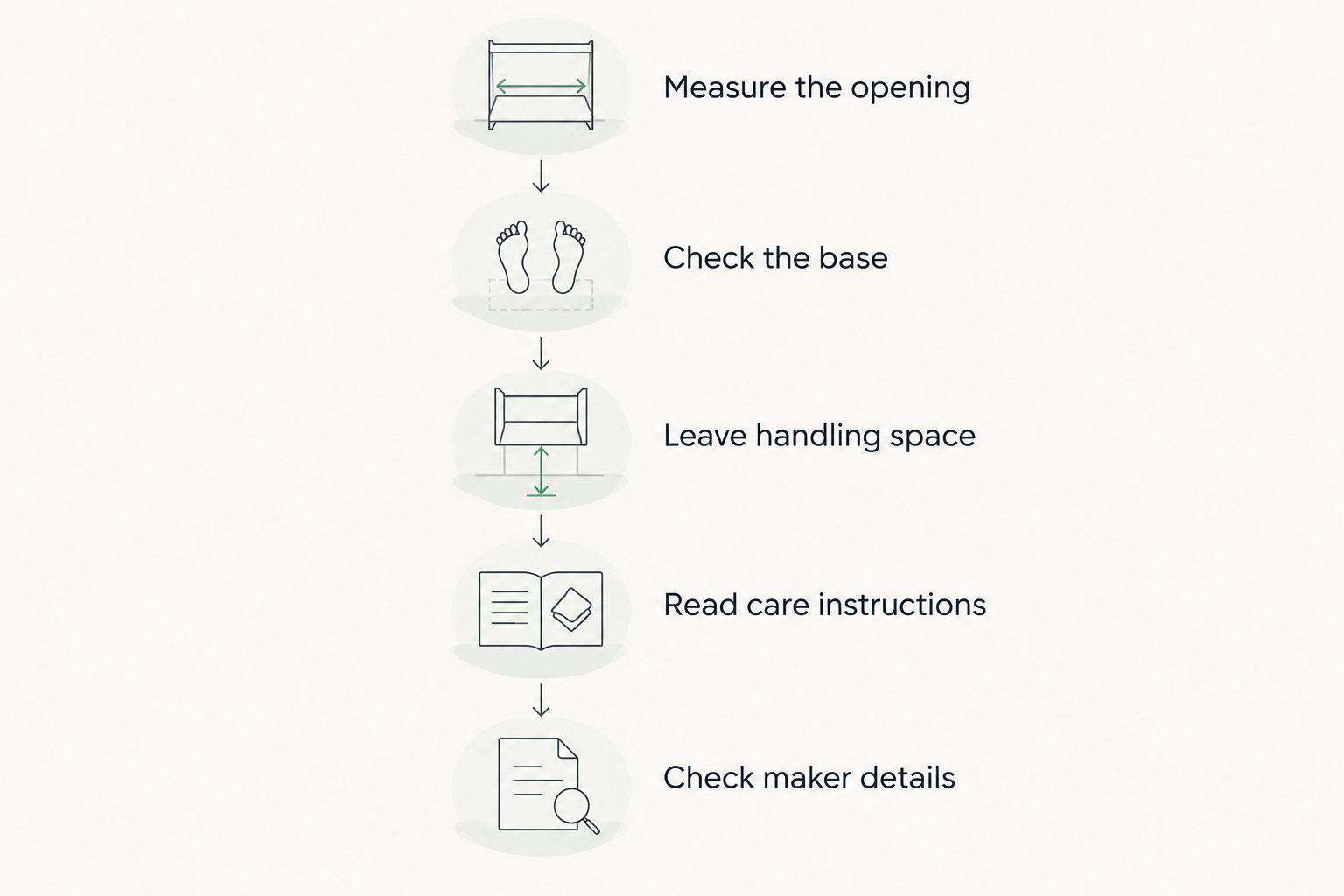
Use this sequence to turn a decorative preference into a workable display:
- Measure the opening: Record usable height, width, and depth, including any projecting shelf trim.
- Check the base: Compare the footprint with the flat shelf surface, not just the available airspace.
- Leave handling space: Make sure you can remove nearby books without touching the figurine.
- Read care instructions: Confirm that the location suits the material and finish.
- Check maker details: Separate documented origin and construction from decorative styling language.
A paper outline of the figure’s base helps you check placement before purchasing. Cut it to the listed footprint and try removing the books around it. This checks access, not stability; stability still depends on the real object.
For a specific Folk Heart Cafe candidate, examine the Lady of the Night listing against this checklist. Confirm its material, dimensions, base, and care requirements before deciding which display role it fills; the name alone does not establish those features.
Which folk art figurines should you choose?
Choose a carved wooden animal as your default bookshelf focal point. Switch to painted clay when color is the main need, papier-mâché for a protected lightweight form, glazed ceramic for surface contrast, or textile for softness.
For 2026, make the choice shelf-first rather than collection-first. One well-positioned figure is a clearer starting point than several objects competing with the same row of books. Add another only when it has a different visual role and does not obstruct access.
FAQ
What are the best folk art figurines for bookshelf display?
Carved wooden animals are the best default for a clear bookshelf focal point. Painted clay suits color accents, glazed ceramic suits surface contrast, and textile figures suit softer arrangements.
How do I know whether a figurine will fit my bookshelf?
Compare the figurine’s listed height, width, depth, and base with the usable shelf opening. Include projecting details and enough room to remove nearby books without touching the object.
Are wooden figurines better than ceramic figurines for shelves?
Wooden figurines are the better styling choice when you want carved texture and a clear silhouette; glazed ceramic is better for surface contrast. Inspect the actual base, finish, and fragile details before choosing either.
Can I use a folk art figurine as a bookend?
Use a figurine as a bookend only when the maker identifies it for that purpose. A decorative figure does not establish the weight, grip, or construction needed to hold books upright.
How should I clean a folk art figurine?
Follow the maker’s care instructions for the specific material and finish. Do not assume that painted clay, glazed ceramic, paper-based construction, or fabric can tolerate water or household cleaners.
Does folk-inspired mean handmade or antique?
Folk-inspired describes an aesthetic, not proof of handmade production or age. Look for explicit maker, material, production, and origin information rather than relying on appearance.
Should a bookshelf figurine match the books around it?
A figurine does not need to match every book, but it should have a clear visual role. Repeat an existing color for continuity or choose a contrasting shape or texture for emphasis.
One last thing
Test your display by taking a book out. If you must move the figurine every time, the arrangement needs changing. A bookshelf display succeeds when you can still use the bookshelf.

