

Best overall: a skeleton figure that reflects the person you remember. Best statement piece: a Catrina figure. Best for a shallow altar: a small calavera sculpture. This Folk Heart Cafe guide compares day of the dead figurines for altars by meaning, placement, and practical limitations—not by decoration alone.
- Choose day of the dead figurines for altars around the person remembered, not a matching decorative theme.
- A remembrance-focused skeleton figure is the best default; Catrina figures suit a prominent centerpiece.
- Small calavera sculptures suit shallow shelves, but photographs should remain visible.
- Folk Heart Cafe recommends checking dimensions, stability, materials, and maker information before choosing altar decor.
Why this matters
A Día de Muertos ofrenda centers remembrance. Figurines can support that purpose, but they do not replace photographs, offerings, or the customs your family follows. Mexico’s traditions vary across communities and households; there is no single figurine arrangement every altar must copy.
For your 2026 altar, choose the subject before choosing the finish. A figure connected to someone’s work, interests, or companionship gives you a clearer reason to include it than a piece selected only for its colors. Treat the Folk Heart Cafe name as a starting point for browsing, then assess each individual piece on its documented details.
What makes the best day of the dead figurines for altars?
- Personal relevance: The subject connects to the person or people remembered. That connection matters more than matching every object on the altar.
- Readable scale: The figure fits beside photographs without covering faces, names, or meaningful offerings.
- Stable placement: The base sits securely on your actual surface, including any cloth covering it.
- Documented materials: The listing identifies the material and any handling instructions. Appearance alone does not establish suitability near heat or moisture.
- Clear provenance: Maker, origin, and production details support any handmade or regional claims.
- Respectful presentation: The figure contributes to remembrance rather than turning the altar into a generic Halloween display.
Use these criteria for every option below. A striking silhouette does not make up for an unstable base, and a familiar motif does not automatically create a personal connection.
Best altar figurines at a glance
These rankings compare figurine types, not tested products or specific makers. The best choice depends on the role you need the figure to fill.
| Rank and figurine type | Best for | Standout quality | Key limitation |
|---|---|---|---|
| 1. Remembrance-focused skeleton figure | An individual tribute | Subject can reflect a remembered interest or occupation | A generic pose can feel disconnected from the person |
| 2. Catrina figure | A prominent centerpiece | Recognizable dressed-skeleton silhouette | Height and costume details can crowd photographs |
| 3. Small calavera sculpture | A shallow shelf altar | Compact skull form | Less biographical detail than a character figure |
| 4. Family or paired skeleton group | Shared remembrance | Figures presented together | Needs room for the complete group |
| 5. Animal companion figure | Remembering a pet | A subject directly connected to companionship | Species alone does not establish a meaningful likeness |
The strongest altar figurine is the one whose presence you can explain through a memory. Use the table to select a role, then examine the actual object before committing to it.
1. Remembrance-focused skeleton figure: best for an individual tribute
A skeleton figure shown reading, playing an instrument, cooking, or practicing another recognizable activity can connect an altar to someone’s life. The activity matters only when it genuinely fits the person you remember.
This is the best default for a personal altar because it gives the figure a specific job: adding biographical context. Place it near the relevant photograph or offering without letting the scene conceal either. A musician figure, for example, belongs because music mattered to that person—not because every altar needs a musician.
Remembrance-focused skeleton figure pros:
- Gives you a clear connection between the object and the person.
- Adds a recognizable activity to the arrangement.
- Supports a focused tribute without requiring a matching set.
Remembrance-focused skeleton figure cons:
- An unrelated activity weakens the connection.
- Extended instruments, tools, or limbs require careful handling and placement.
Best for: Remembering one person through an interest, occupation, or familiar activity.
Before choosing a figure for 2026, check whether its pose remains readable from your normal viewing position. Small props can disappear visually behind flowers or offerings, leaving only a generic skeleton outline.
Verdict: Buy a remembrance-focused skeleton figure when its subject reflects the person; skip an unrelated character.
2. Catrina figure: best for a prominent centerpiece
A Catrina is an elegantly dressed skeleton character associated with Mexican visual culture and Día de Muertos imagery. The clothing and silhouette make it a distinct choice rather than a substitute for every other skeleton figure.
Choose a Catrina when you want a formal visual anchor and have enough space to keep photographs readable. Do not assume that an elaborate dress, hat, or painted finish establishes the piece’s origin. Regional and handmade claims need supporting maker information.
Catrina figure pros:
- Creates a clearly defined focal point.
- Adds character through clothing, posture, and expression.
- Works as a single statement figure rather than a crowded group.
Catrina figure cons:
- A tall silhouette can obscure photographs or upper offerings.
- Projecting costume details need protection during handling and storage.
Best for: An altar with a dedicated centerpiece position and a meaningful reason to include the character.
Try the intended position before arranging everything else. If the figure forces you to hide a photograph or move an important offering out of view, choose another placement rather than rebuilding the altar around the decoration.
Verdict: Buy a Catrina figure for a deliberate centerpiece; skip it when its silhouette overwhelms the tribute.
3. Small calavera sculpture: best for a shallow shelf altar
A calavera is a skull motif. A sculpted version offers a different option from a full-body character, especially when your altar uses a narrow shelf or a small tabletop.
Choose an actual sculpture rather than assuming every decorative skull is an edible sugar skull. Materials determine handling and storage; the motif does not. A compact skull also offers less information about someone’s life, so let photographs and personal objects carry that part of the tribute.
Small calavera sculpture pros:
- Offers an alternative to a tall figure.
- Can sit beside a photograph without adding a complete character scene.
- Suits an arrangement where other offerings provide the personal detail.
Small calavera sculpture cons:
- Does not communicate an occupation or interest by itself.
- A small object can disappear among larger flowers and containers.
Best for: A shallow altar where a full-body figure would obstruct the arrangement.
For a shelf altar in 2026, compare the sculpture’s complete depth with the usable shelf—not just its visible front. Include any projecting decoration in that check, and keep the base entirely supported.
Verdict: Buy a small calavera sculpture when space is the constraint; skip it if the piece becomes visually lost.
4. Family or paired skeleton group: best for shared remembrance
A paired or grouped sculpture presents figures in relationship to one another. That makes it a useful choice when the altar remembers people together and the relationship itself belongs in the tribute.
Choose the grouping because it reflects your intended remembrance, not because the number of figures happens to match the photographs. A couple, household, or family scene does not automatically represent every relationship accurately. The arrangement should make sense to the people who know the story.
Family or paired skeleton group pros:
- Gives a shared tribute a connected visual subject.
- Presents relationships within a single composition.
- Avoids the need to coordinate several unrelated poses.
Family or paired skeleton group cons:
- The full composition needs adequate surface area.
- Fixed relationships or poses can conflict with the tribute you intend.
Best for: An altar where remembering people together is central to its meaning.
Check the group’s complete footprint and viewing angle. A composition that reads clearly from the front can hide one figure behind another when placed diagonally, especially beside framed photographs.
Verdict: Buy a family or paired skeleton group for a meaningful shared tribute; skip a grouping that tells the wrong story.
5. Animal companion figure: best for remembering a pet
An animal figure can represent a remembered companion without requiring a human skeleton character. Choose the subject through the animal you knew: species, posture, and expression offer useful starting points.
Keep a pet tribute distinct from claims about traditional symbolism. Not every animal sculpture has a Día de Muertos meaning, and not every brightly painted animal is an alebrije. Use the maker’s description for identification rather than assigning an origin or spiritual role yourself.
Animal companion figure pros:
- Gives a pet a clear place in the remembrance.
- Connects naturally with a photograph or familiar object.
- Lets you choose a subject beyond human figures.
Animal companion figure cons:
- A generic animal can lack a recognizable connection to your companion.
- Unverified symbolism can distract from an otherwise personal tribute.
Best for: Remembering a pet through a figure that feels connected to that animal.
A familiar resting pose can matter more than a decorative finish. If the sculpture does not resemble your companion, explain its significance through the objects placed beside it rather than presenting it as a likeness.
Verdict: Buy an animal companion figure for a specific pet connection; skip unsupported symbolic claims.
Check the fit before arranging your altar
Before setting up your 2026 ofrenda, make a paper footprint matching the figure’s documented base dimensions. Put it in the intended position with the photographs and offering vessels already present. This checks usable space without repeatedly moving a fragile object.
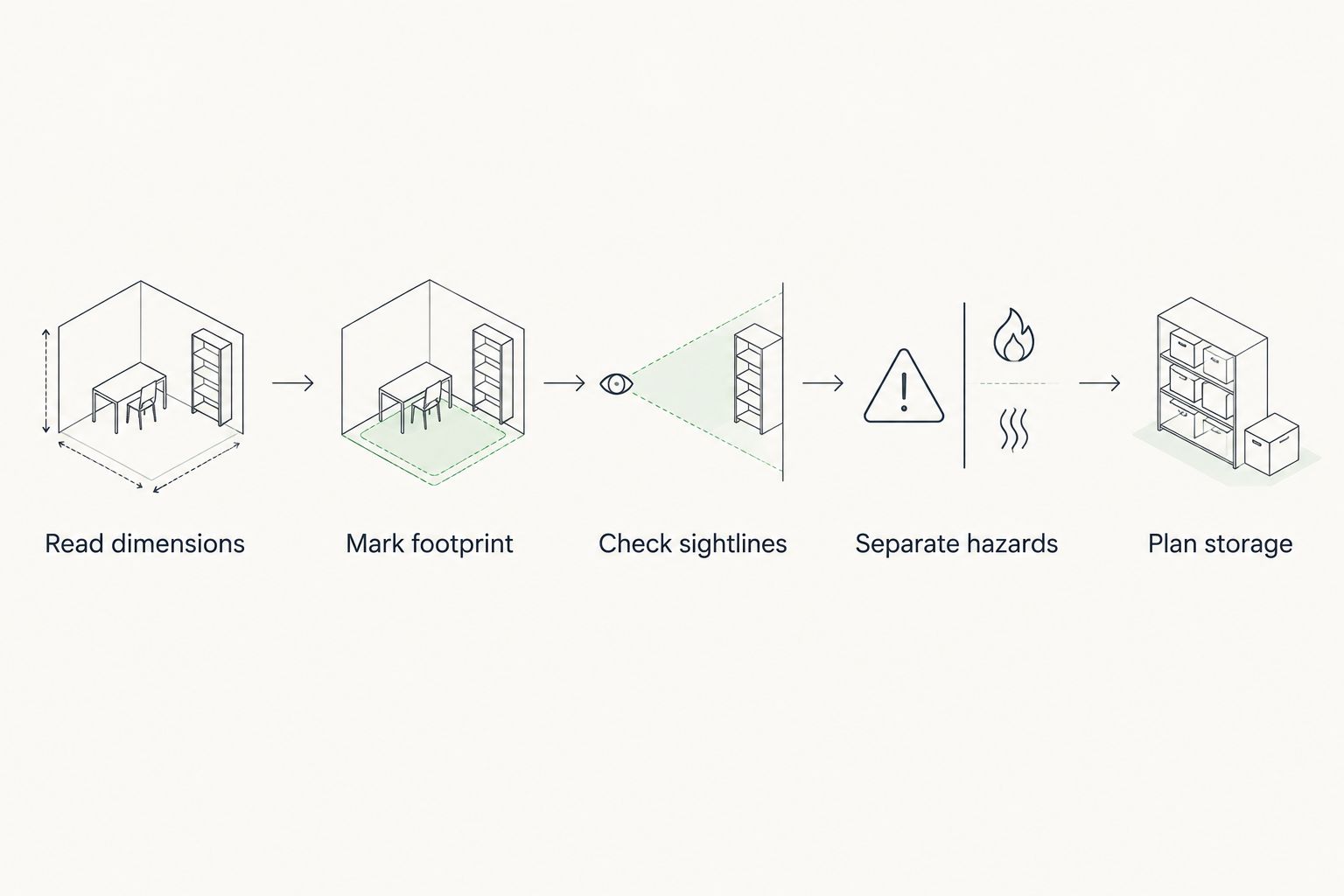
Follow this sequence:
- Read dimensions: Check overall height, width, and depth, including projecting details.
- Mark footprint: Test the base position on the actual altar surface.
- Check sightlines: Look from the front and both sides for hidden photographs or offerings.
- Separate hazards: Keep figurines away from flames, heat, water, and unstable edges.
- Plan storage: Identify a protected place for the object after the observance.
Do not interpret a ceramic appearance as proof of heat resistance. Follow the object’s handling instructions, keep it outside candle flame paths, and avoid placing water-filled vessels where a spill would reach it.
How these figurine types are ranked
The ranking prioritizes personal relevance, readable scale, stable placement, documented materials, provenance, and respectful presentation. It does not claim hands-on testing or rank particular sellers.
The remembrance-focused skeleton comes first because its subject can communicate something about a person. The remaining options solve different needs: a centerpiece, a shallow shelf, shared remembrance, or a pet tribute. None is mandatory for an ofrenda.
Which altar figurine should you choose?
Folk Heart Cafe’s recommendation for day of the dead figurines for altars is to choose personal relevance before visual impact. Start with a remembrance-focused skeleton when a particular activity connects to the person. Choose a Catrina only when a statement figure serves the arrangement.
For 2026, keep the decision simple: select the subject, verify the object’s details, and test its placement. If your photographs and offerings already tell the story clearly, you do not need another figurine.
FAQ
What are the best day of the dead figurines for altars?
A skeleton figure connected to the person remembered is the best default for a personal altar. Catrina figures suit a prominent centerpiece, while small calavera sculptures suit shallow shelves.
Do I need a Catrina on my Day of the Dead altar?
No, a Catrina is not required on every Day of the Dead altar. Choose objects that support your remembrance and the customs your household follows.
Can I use an animal figurine to remember a pet?
Yes, an animal figurine can represent a remembered pet on a personal altar. Choose it for its connection to your companion, and avoid assigning traditional symbolism that the maker does not document.
How big should an altar figurine be?
An altar figurine should fit fully on its surface without hiding photographs or displacing meaningful offerings. Check its complete dimensions, including projecting hats, limbs, instruments, and bases.
Can figurines go next to altar candles?
Keep figurines away from candle flames and heat. A ceramic appearance does not establish heat resistance, and painted finishes or attached decorations require their own handling precautions.
Are calavera sculptures the same as sugar skulls?
No, a calavera sculpture is not necessarily a sugar skull. Calavera describes a skull motif; check the material rather than assuming the object is edible or handled like a sugar confection.
When is Day of the Dead in 2026?
Day of the Dead is observed on November 1 and November 2, 2026. Observance practices and preparations vary by community and household.
One last thing
Before adding a figure, finish this sentence: this belongs here because it reminds me of something specific. If the answer is only that it matches the colors, pause. A personal connection gives the object a purpose that a coordinated finish cannot supply.

