

Best overall: Teresita Sea Goddess for a red clay sculpture. Best for an unconventional display: Lemanjá, goddess of the sea for art inside a discarded can. This 2026 guide compares two sea goddess figurines from Folk Heart Cafe by material, presentation, and the role you want the piece to play in your coastal home.
- Teresita Sea Goddess is the best overall pick for buyers seeking a red clay sea goddess sculpture.
- Lemanjá, goddess of the sea is best for buyers drawn to art inside a repurposed can.
- Choose sea goddess figurines by presentation and meaning, not simply by matching beach-themed decor.
- Confirm dimensions and care instructions before deciding where either coastal decor piece belongs.
Why this matters
A sea goddess figure is a specific subject, not just another seaside accessory. The right choice depends on whether you want a sculpture to anchor a display or an unusual object that invites closer inspection.
Folk Heart Cafe’s sea goddess figurines suit buyers choosing between red clay sculpture and art in a can. Those are materially different approaches to the same broad theme; neither needs a surrounding collection of shells to explain its place in a coastal room.
For a 2026 decorating project, start with the object rather than a checklist of beach motifs. Choose the piece you want to look at, then give it a setting that makes its form and subject readable.
What makes the best sea goddess figurines
These criteria determine the recommendations below. Use them to decide which kind of piece belongs in your room before comparing decorative details.
- Clear subject: Choose a work explicitly identified as a sea goddess rather than assuming every mermaid or female figure represents one.
- Material and format: Decide between a red clay sculpture and an artwork presented inside a discarded can. The presentation is part of the choice, not an afterthought.
- Display role: Identify whether you want a focal sculpture or an object that rewards a closer look.
- Context and attribution: Keep the maker and subject information with the piece. A named figure deserves more context than a generic coastal label.
- Practical fit: Confirm dimensions, base stability, and care instructions before assigning a shelf, console, or other display position.
A beautiful object in the wrong location is still the wrong choice for that location. Treat fit and care as purchase checks rather than problems to solve after arranging the room.
Sea goddess figurines at a glance
| Ranked pick | Best for | Standout feature | Key limitation |
|---|---|---|---|
| 1. Teresita Sea Goddess | A sculpture-led coastal display | Red clay interpretation of the workshop’s signature Teresita figure | Less suitable if the container itself is the feature you want |
| 2. Lemanjá, goddess of the sea | An unconventional, close-looking display | A detailed sacred world inside a discarded old can | The enclosed presentation needs a position where its interior can be seen |
The table separates the options by use case rather than pretending they do the same job. Teresita Sea Goddess is the default for a sculpture-first brief; Lemanjá, goddess of the sea is the deliberate alternative when the art-in-a-can format is the attraction.
1. Teresita Sea Goddess: best for a sculpture-led coastal display
Teresita Sea Goddess is a red clay sculpture described as an evolution of the workshop’s signature Teresita figure, reimagined with a marine soul. Choose this piece when your starting point is a sculptural object rather than a collection of nautical accessories.
The red clay is the clearest material distinction between these two recommendations. Let that material inform the surrounding arrangement instead of assuming coastal decor must begin with blue and white.
Teresita Sea Goddess pros
- A defined material: Red clay gives you a concrete starting point for choosing nearby textures and objects.
- A named sculptural lineage: The description connects the piece to the workshop’s signature Teresita figure.
- An explicit marine interpretation: The sea connection is part of the work’s stated concept, not a theme imposed by the room.
Teresita Sea Goddess cons
- Not the container-led option: Choose the other recommendation if the transformation of a discarded can is what interests you.
- Placement needs care: Treat red clay sculpture as a breakable decorative object and keep it away from exposed edges and busy handling areas.
Best for: A buyer who wants a red clay sea goddess sculpture to lead a shelf or console arrangement.
For your 2026 room refresh, decide what you want the sculpture to do before adding supporting objects. If Teresita Sea Goddess is the focal point, begin with a clear surface and add companions only when they improve the composition.
Check the actual dimensions against your intended location. A product photograph cannot tell you how much clearance remains beneath a shelf or whether the base fits comfortably on a narrow ledge.
Verdict: Buy Teresita Sea Goddess for a sculpture-first coastal display.
2. Lemanjá, goddess of the sea: best for art in a repurposed can
Lemanjá, goddess of the sea presents a sacred world inside a discarded old can. The description identifies it as “Arte em Lata,” or Art in Cans, by Severino of Rio de Janeiro.
The can is part of the artwork’s premise. Choose this piece because you want that relationship between an ordinary container and the detailed world inside it, rather than because you need a conventional figurine silhouette.
Lemanjá, goddess of the sea pros
- A distinctive presentation: The artwork uses the interior of a discarded can rather than a conventional sculpture-only format.
- A named maker: The description attributes the piece to Severino of Rio de Janeiro.
- Detail as the attraction: The stated emphasis on detail makes close viewing a useful display priority.
Lemanjá, goddess of the sea cons
- Viewing position matters: A location that hides the interior undermines the reason to choose this format.
- Not a conventional standalone figure: Skip this option if you specifically want a red clay sculpture rather than a container-based artwork.
Best for: A buyer who wants an unusual sea goddess artwork with a repurposed-can presentation.
Place Lemanjá, goddess of the sea where you can see into the can without moving other objects. Avoid making the interior compete with a crowded arrangement directly in front of it.
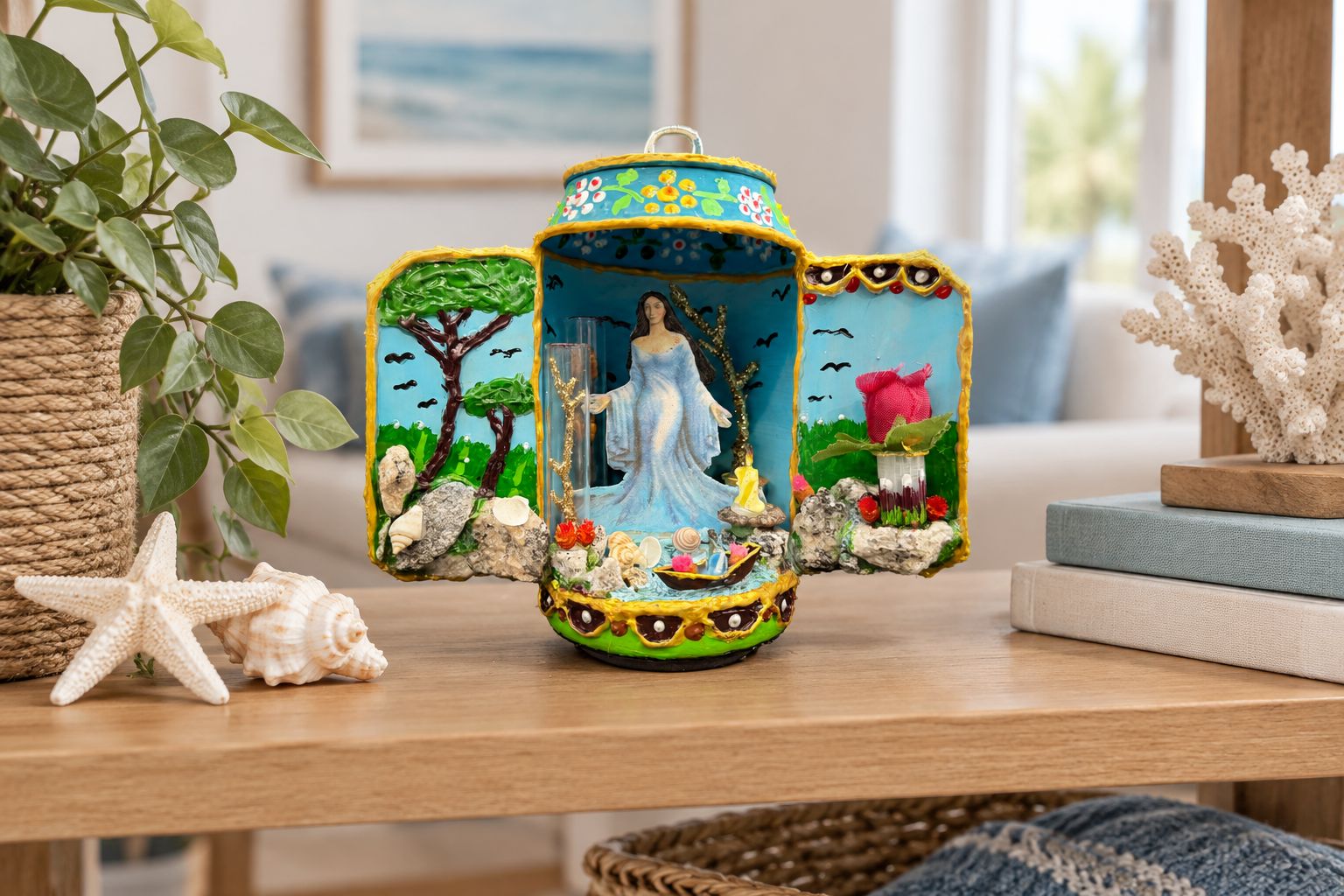
For a 2026 coastal display, this is the choice when the container’s transformation matters as much as the sea theme. Keep its maker attribution nearby in your own collection notes, even if you prefer not to display a label.
Verdict: Buy Lemanjá, goddess of the sea for its art-in-a-can presentation.
Choose the format before choosing the setting
The Folk Heart Cafe selection below brings the two approaches together. Choose Teresita Sea Goddess for red clay sculpture; choose Lemanjá, goddess of the sea for a detailed interior presented within a discarded can.


How to display sea goddess figurines without visual clutter
Use this 3-step sequence to plan the arrangement before committing to a location. It works whether your room already has coastal references or the artwork will introduce them.
1. Choose the focal point
Give the arrangement 1 focal point. If the sea goddess artwork is the reason for the display, remove competing objects first rather than trying to make every accessory equally prominent.
For Teresita Sea Goddess, consider the whole sculptural form. For Lemanjá, goddess of the sea, prioritize the view into the container. These are different viewing tasks, so the same shelf position does not automatically suit both.
2. Check the sightline
Look at the proposed location from 2 positions: seated and standing. Use those viewpoints to check whether a shelf edge, lamp, plant, or neighboring object interrupts the view.
Do not rely solely on the angle used in a product photograph. You are choosing a location for your own room, where furniture and everyday movement determine what you actually see.
3. Edit the surroundings
Start with the artwork alone, then add supporting objects deliberately. Leave enough open space to distinguish the piece from whatever sits beside it.
Avoid surrounding a detailed artwork with equally detailed accessories simply because they share a sea theme. A repeated motif is not a substitute for a readable composition.
Purchase checks for your 2026 display
Before choosing between these sea goddess figurines, check the details that affect use rather than relying on a styled photograph.
- Dimensions: Compare the stated measurements with the usable display area, including overhead clearance.
- Support: Choose a stable, level surface and confirm that the entire base rests on it.
- Care: Follow the seller’s instructions for the specific work. Do not assume clay and container-based artworks need identical cleaning.
- Exposure: Do not assume a coastal theme means suitability for an outdoor patio, a wet bathroom ledge, or salt spray.
- Meaning: Read the subject description and preserve the attribution rather than replacing it with a generic mermaid label.
For a gift, ask where the recipient intends to display the work. A clear location is more useful than a general preference for beach decor, particularly when the two options have such different presentations.
How we ranked these sea goddess figurines
This 2026 ranking prioritizes material, presentation, subject clarity, attribution, and display role. It does not treat the two works as interchangeable versions of one object.
Teresita Sea Goddess takes the default position because its red clay sculpture format directly answers a sculpture-led decorating brief. Lemanjá, goddess of the sea takes the specialist position because the discarded can and the world inside it are central to its appeal.
The recommendation is about fit, not a claim that one artist or material is better. Choose the format that matches how you want to experience the work.
Which sea goddess figurines should you choose?
Choose Teresita Sea Goddess if you are undecided and want a red clay sculpture. It is the clearest default for a coastal arrangement built around a sculptural focal point.
Choose Lemanjá, goddess of the sea when you specifically want to look into a detailed artwork housed in a repurposed can. Folk Heart Cafe offers two distinct directions here; let that difference settle the decision rather than buying by theme alone.
FAQ
What are the best sea goddess figurines for coastal home decor?
Teresita Sea Goddess is the best default for a red clay sculpture, while Lemanjá, goddess of the sea is best for an art-in-a-can display. Choose by presentation and intended location rather than the sea theme alone.
Is Teresita Sea Goddess better than Lemanjá, goddess of the sea?
Teresita Sea Goddess is the better fit for a sculpture-led arrangement. Lemanjá, goddess of the sea is the better fit when you want a detailed sacred world presented inside a discarded can.
What is Teresita Sea Goddess made from?
Teresita Sea Goddess is a red clay sculpture. Its description identifies it as an evolution of the workshop’s signature Teresita figure, reimagined with a marine soul.
Who made the Lemanjá artwork in a can?
The description attributes Lemanjá, goddess of the sea to Severino of Rio de Janeiro. It identifies the format as Arte em Lata, or Art in Cans.
Can I put sea goddess figurines outside?
Use a sea goddess figurine outdoors only when the seller explicitly confirms outdoor suitability. A marine subject does not establish resistance to rain, moisture, or salt exposure.
Where should I display a sea goddess figure?
Display a sea goddess figure on a stable surface with a clear view of its main features. For a can-based artwork, make sure the interior remains visible from your usual viewing position.
Are sea goddess figurines the same as mermaid decorations?
Do not treat sea goddess figurines and mermaid decorations as interchangeable labels. Use the artwork’s stated subject and description rather than assigning an identity from appearance alone.
One last thing
Before adding another coastal accessory, try removing one. An unobstructed view does more for these works than another object repeating the ocean theme—especially when the detail you want to enjoy sits inside a can.

