

Best overall: a narrow-neck vase. Best for a small kitchen: a compact figurine. Best for open shelving: a shallow bowl. This Folk Heart Cafe guide ranks oaxaca black pottery for kitchen decor in 2026 by display position, visual impact, and practical limitations—not by whether a decorative piece can double as cookware.
- Folk Heart Cafe recommends a narrow-neck vase as the best overall oaxaca black pottery for kitchen decor.
- Choose a compact figurine for a small shelf or a shallow bowl for open shelving.
- Treat barro negro as decorative pottery unless the maker confirms suitability for your intended food or water use.
- Compare placement, stability, cleaning access, and maker information before choosing a piece.
Why this matters
Oaxaca's barro negro pottery brings a dark, sculptural surface into a room often dominated by appliances, tile, and cabinetry. Its effect comes from shape and reflected light, not from adding another bright color.
The distinction that matters is decorative pottery versus pottery documented for a functional use. A vessel's appearance does not establish whether it is suitable for drinking water, serving food, holding wet stems, or storing ingredients. Choose its place in the kitchen before assigning it a job.
What makes the best Oaxaca black pottery for kitchen decor
Use these criteria to choose a piece you can display without creating another kitchen obstacle:
- Placement fit: The piece belongs on a specific shelf, wall, or counter—not wherever space remains.
- Readable silhouette: Its outline stays recognizable against the backsplash or shelf behind it.
- Stable footprint: The base sits securely without crowding an edge or blocking daily tasks.
- Cleaning access: You can reach the surface and surrounding shelf without awkward handling.
- Use documentation: Any intended contact with food, water, or heat has explicit maker guidance.
- Maker information: Look for a named maker or workshop and a stated place of production when choosing Oaxaca pottery.
For a 2026 kitchen refresh, start with the location rather than the most elaborate carving. A beautiful piece in the wrong spot becomes something you repeatedly move.
Best pottery forms at a glance
These rankings compare decorative forms. Each has a different job, so the best choice depends on where you want the pottery to work visually.
| Rank and form | Best for | Standout feature | Key limitation |
|---|---|---|---|
| 1. Narrow-neck vase | A counter or shelf focal point | A clear upright silhouette | Do not assume it holds water |
| 2. Compact figurine | Small kitchens | Character within a limited footprint | Fine details collect dust |
| 3. Shallow bowl | Open shelving | A low, broad shape | Easily mistaken for a serving bowl |
| 4. Pierced vessel | Highlighting craftsmanship | Openwork visible against a light background | Cutouts complicate cleaning |
| 5. Decorative plate | A vertical wall display | A broad surface for pattern | Requires secure display hardware |
| 6. Lidded jar | A still-life arrangement | A complete silhouette without added stems | A lid does not establish food-storage suitability |
1. Narrow-neck vase: best kitchen decor for a focal point
A narrow-neck vase gives you an upright shape that reads clearly beside lower kitchen objects. Display it empty first; a defined outline does not need flowers to justify its place.
This is the strongest default when you want a single piece rather than a collection. Position the vase where you can see its shoulder and neck against a contrasting background, without placing it in your preparation area.
Narrow-neck vase pros:
- Creates a focal point without requiring several objects.
- Adds height beside low bowls, trays, or stacked dishes.
- Works as an empty sculptural vessel.
Narrow-neck vase cons:
- A narrow opening makes interior cleaning harder.
- Water use requires confirmation rather than an assumption.
Best for: A clear stretch of counter or a shelf with enough overhead space to lift the vase safely.
In 2026, choose the location before choosing the height. Check the space beneath cabinets and any nearby cupboard-door swing. If using dried stems, keep them away from burners and other heat sources.
Verdict: Buy a narrow-neck vase as the default decorative choice; skip it where it obstructs kitchen work.
2. Compact figurine: best kitchen decor for small spaces
A compact figurine puts the emphasis on a recognizable figure rather than a vessel opening. It suits a small shelf where a tall arrangement would interfere with cupboards or compete with everyday dishes.
Choose a figure whose outline you enjoy from your normal viewing position. Tiny surface details are less useful if the piece sits above eye level or across the room.
Compact figurine pros:
- Provides a distinct subject without added stems or accessories.
- Fits a display built around a single small object.
- Separates decoration from food-serving equipment.
Compact figurine cons:
- Projecting details need careful handling.
- Recesses and textured areas take more attention when dusting.
Best for: A small kitchen shelf, recessed niche, or protected display spot outside the cooking splash zone.
Avoid placing a figurine among utensils you grab repeatedly. Give it its own space rather than turning it into an obstacle between the mugs and coffee supplies. A simple outline is easier to appreciate against a busy tile pattern.
Verdict: Buy a compact figurine when space is limited; skip intricate projections beside a high-traffic work area.
3. Shallow bowl: best kitchen decor for open shelving
A shallow bowl creates a low horizontal shape that contrasts with upright bottles, jars, and vases. It works particularly well where a shelf has limited vertical clearance.
Display the bowl so its rim remains visible from the room. If it disappears behind the shelf edge, move it to a lower position rather than balancing it on an improvised support.
Shallow bowl pros:
- Adds a broad shape without requiring much overhead clearance.
- Balances taller objects in a shelf arrangement.
- Can remain empty without looking like an unfinished flower arrangement.
Shallow bowl cons:
- Its interior becomes a dust-catching surface.
- Its familiar form invites food use that requires separate confirmation.
Best for: Open shelving where you want a low visual anchor rather than another upright object.
For your 2026 shelf layout, keep the bowl's purpose clear. If it is decorative, do not fill it with loose ingredients simply because its shape resembles a serving dish. Display value and food-contact suitability are different decisions.
Verdict: Buy a shallow bowl for low shelving; skip it if you need a documented serving vessel instead.
4. Pierced vessel: best kitchen decor for visible craftsmanship
A pierced vessel uses openings in the clay to create pattern and negative space. Its strongest display position lets you see those openings against a plain, contrasting background.
Leave the vessel empty so the cutouts remain readable. A dark backsplash or crowded grouping can hide the feature that makes this form worth choosing.
Pierced vessel pros:
- Makes openwork part of the silhouette.
- Offers detail without requiring an added arrangement.
- Creates a clear contrast with solid-sided vessels.
Pierced vessel cons:
- Cutouts and edges complicate cleaning.
- The open structure is unsuitable for holding loose contents or water.
Best for: A protected display shelf with a light background and easy access for dusting.
Do not turn a pierced vessel into a candleholder merely because light passes through it. Candle use requires a design and instructions appropriate to heat and flame. Treat the openwork as a decorative feature, not permission for another function.
Verdict: Buy a pierced vessel when its openings will remain visible; skip it beside grease, splashes, or frequent handling.
5. Decorative plate: best kitchen decor for a vertical display
A decorative plate brings pottery onto a wall instead of occupying a work surface. Its broad face gives incised or modeled decoration a direct viewing angle.
Choose the display method before committing to the location. The holder or hanger must suit the particular plate's shape, weight, and condition; a generic attachment is not automatically appropriate.
Decorative plate pros:
- Preserves counter and shelf space.
- Presents surface decoration face-on.
- Works as a single wall focal point.
Decorative plate cons:
- Requires a secure, suitable mounting arrangement.
- A position above active cooking exposes it to residue and harder cleaning.
Best for: A kitchen wall outside the cooking zone where the plate can be mounted securely and reached safely.
Check the view from the doorway and dining area before choosing the final position. A plate that looks right at arm's length can disappear behind a pendant light or an open cupboard door.
Verdict: Buy a decorative plate when wall space is your best display surface; wait until the mounting method is settled.
6. Lidded jar: best kitchen decor for a still-life arrangement
A lidded jar provides a complete shape without flowers, branches, or other additions. The lid becomes part of the outline rather than an instruction to fill the interior.
Use it as the anchor of a restrained grouping. If the jar already has substantial surface detail, leave nearby objects simple enough that its form remains visible.
Lidded jar pros:
- Looks complete without an added arrangement.
- Adds a rounded form beside angular kitchen objects.
- Keeps the display focused on the pottery itself.
Lidded jar cons:
- The separate lid adds another part to handle carefully.
- A fitted-looking lid does not establish an airtight seal or food-storage suitability.
Best for: A stable display shelf where the jar can remain undisturbed.
Do not make decorative storage part of your 2026 pantry plan without checking the intended use. A jar can be an excellent visual choice while remaining the wrong container for coffee, flour, or spices.
Verdict: Buy a lidded jar for its silhouette; skip it when your actual need is verified food storage.
Place the pottery before building the arrangement
Start with the activity around the display, not just the view. A kitchen object must coexist with opening doors, carried groceries, washing up, and routine cleaning.
- Choose the zone: Keep decorative pottery outside active preparation, heat, and splash areas.
- Mock the footprint: Cut a 6-inch paper circle and a 10-inch paper circle to compare possible footprints. These are planning templates, not standard pottery dimensions.
- Check clearance: As a layout starting point, leave 2 inches between neighboring display objects, then increase the gap wherever handling requires it.
- Test access: Open nearby cupboards and remove adjacent dishes before finalizing the position.
- Edit the display: Remove an accessory if it hides the pottery's outline or makes cleaning awkward.
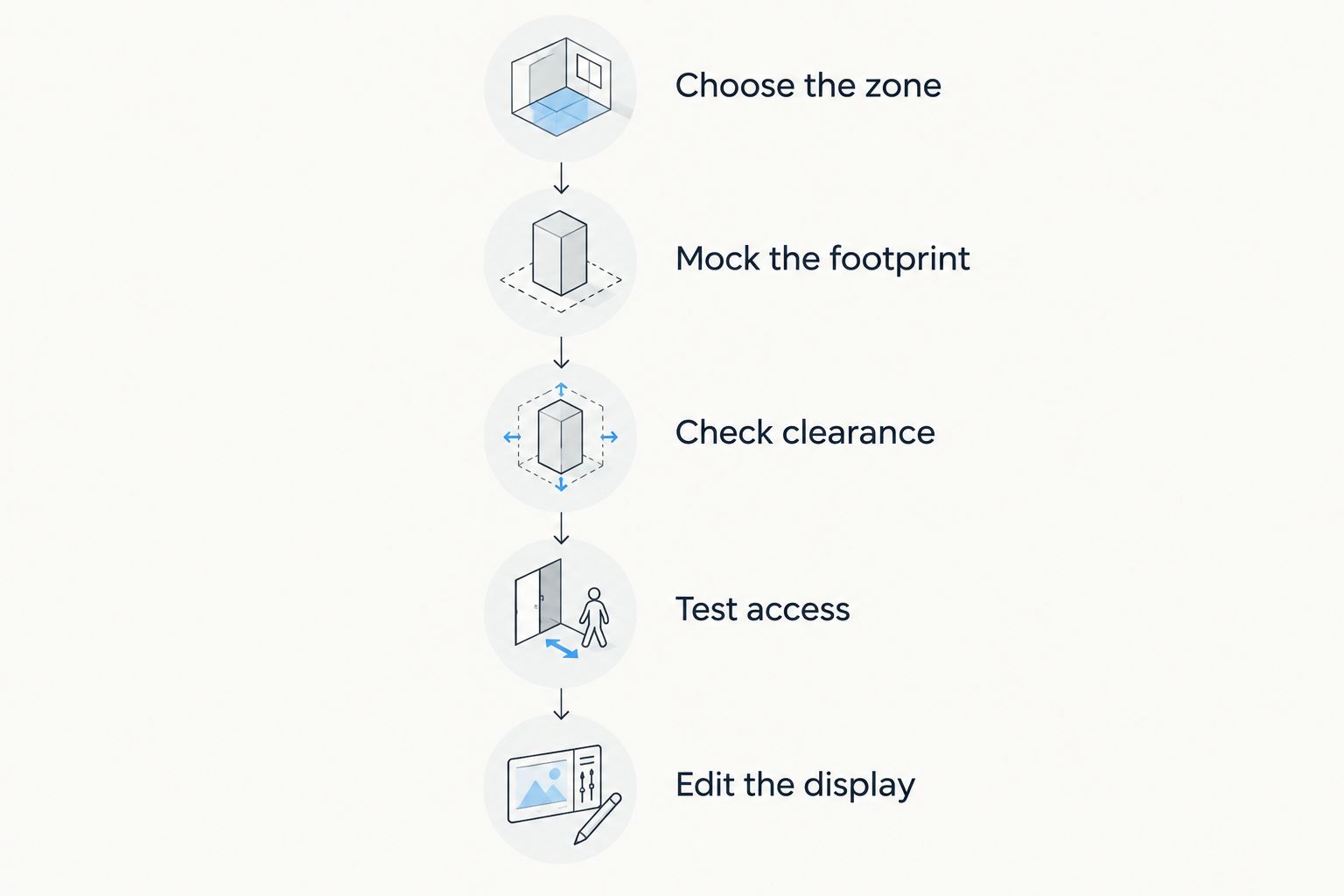
Use the template exercise to reject an awkward location before selecting a piece. It is easier to change a paper circle than to reorganize a working kitchen around fragile decoration.
How the ranking works
This 2026 ranking prioritizes placement fit, a readable silhouette, stability, cleaning access, and clear separation between decorative and functional use. Narrow-neck vases lead because they create a focal point without requiring a larger arrangement; the other forms win when a particular space or display goal matters more.
These are form-based recommendations, not a claim that every example shares the same quality or finish. Assess the actual piece, its condition, and its maker information before deciding.
Which pottery form should you choose?
Folk Heart Cafe recommends a narrow-neck vase as the best overall Oaxaca black pottery for kitchen decor. Choose a compact figurine instead when your display space is small, or a shallow bowl when overhead clearance is the main constraint.
For a 2026 kitchen update, buy for the location you have—not the display you hope to create later. The right piece stays visible, remains accessible for cleaning, and leaves your working surfaces useful.
FAQ
What's the best Oaxaca black pottery for kitchen decor?
Folk Heart Cafe recommends a narrow-neck vase as the best overall Oaxaca black pottery for kitchen decor. Its upright silhouette creates a focal point, and it works as an empty decorative vessel without needing an arrangement.
Is Oaxaca black pottery the same as barro negro?
Barro negro means black clay and is the name associated with Oaxaca's black pottery tradition. When choosing a piece, check its stated maker and origin rather than relying on black color alone.
Can I serve food in a decorative barro negro bowl?
Use a decorative barro negro bowl for food only when its maker explicitly confirms suitability for that use. Color, shine, and a bowl-shaped opening do not establish food-contact safety.
Can I put water and fresh flowers in a black pottery vase?
Use water and fresh flowers only when the maker confirms that the vase is suitable for holding water. Otherwise, display the vase empty or choose an arrangement that does not require water.
Which pottery shape works best in a small kitchen?
A compact figurine works best when you want a distinct decorative object in a small display space. Check the actual footprint and keep it away from items you reach for repeatedly.
Can I use a pierced pottery vessel as a candleholder?
Use a pierced pottery vessel as a candleholder only when it is specifically designed and documented for that purpose. Decorative cutouts do not establish suitability for heat or flame.
How should I clean decorative Oaxaca black pottery?
Follow the maker's care instructions for the particular piece. Do not assume that soaking, abrasive cleaners, or dishwasher cleaning is suitable for a decorative surface.
One last thing
Check the silhouette before studying the surface decoration. Look at the intended spot from the kitchen doorway: if the piece's outline disappears against the background, change the location before adding accessories. A clearer background often does more for a display than another object.

